Builds 48–49 · Since Beta 47
Beta 49: The Estate Comes Alive
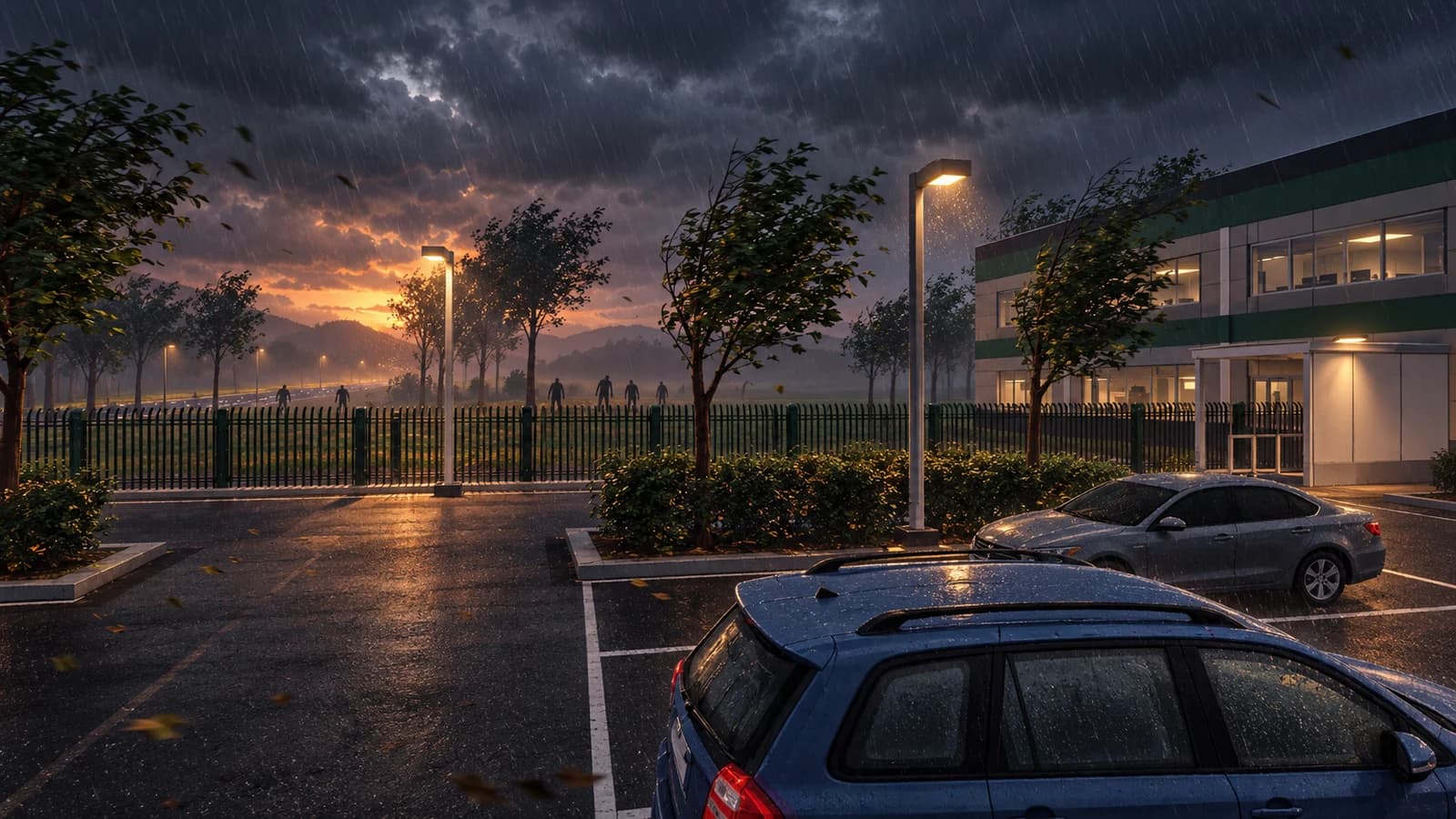
The place beyond the fence finally feels like somewhere the office belongs. And it no longer sits still.
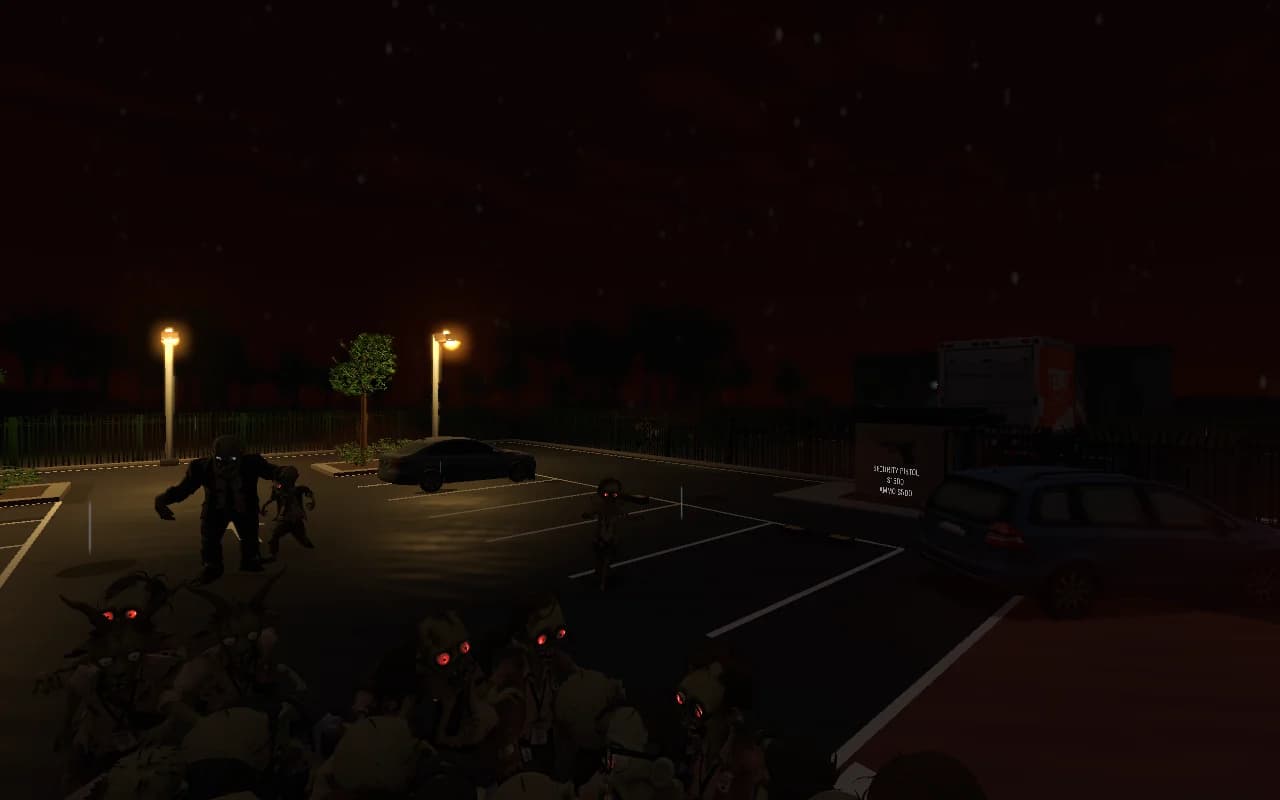
Beta 49 is available for Windows, Linux and macOS. This is the full update since the last news post, Beta 47. It includes Beta 48's light-dependent visibility and the larger exterior, weather, sound and crowd-work changes that followed. The cover above is promotional illustration; every image below is captured in the game.
A real road beyond the gate
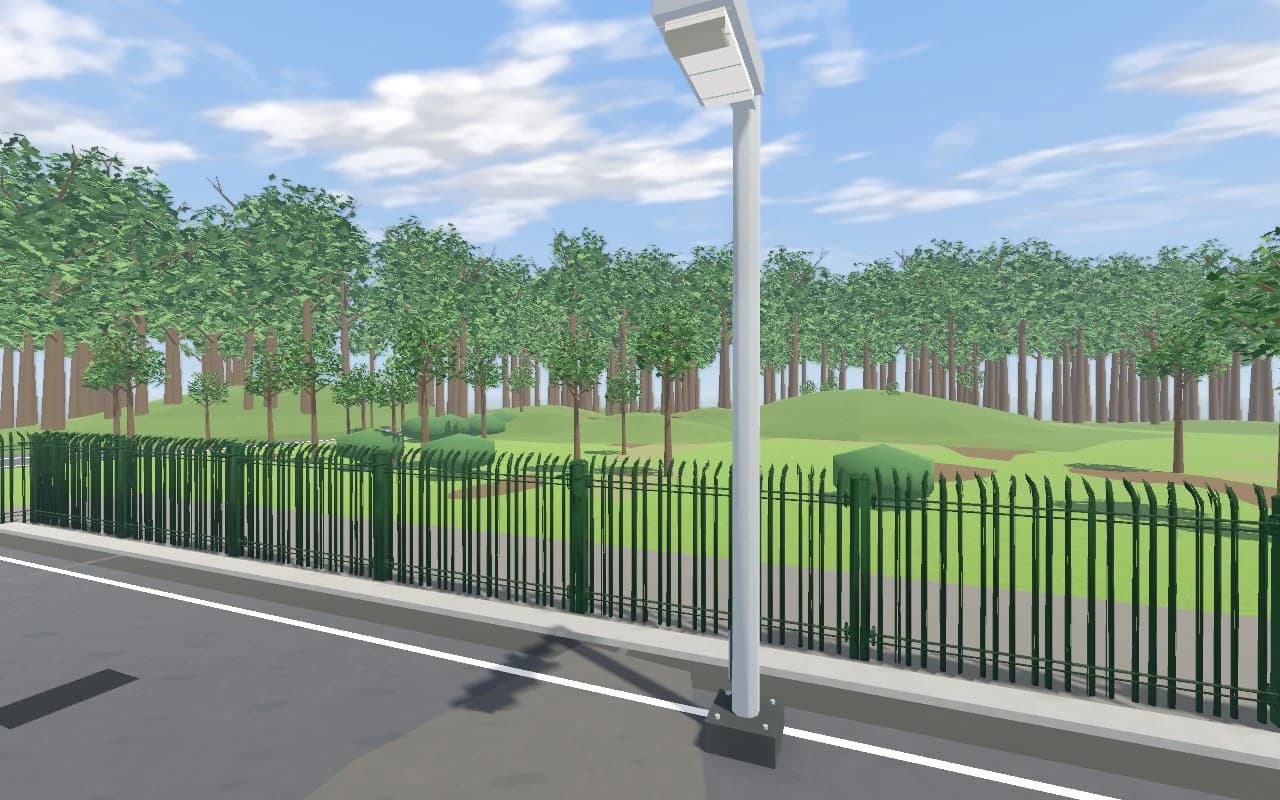
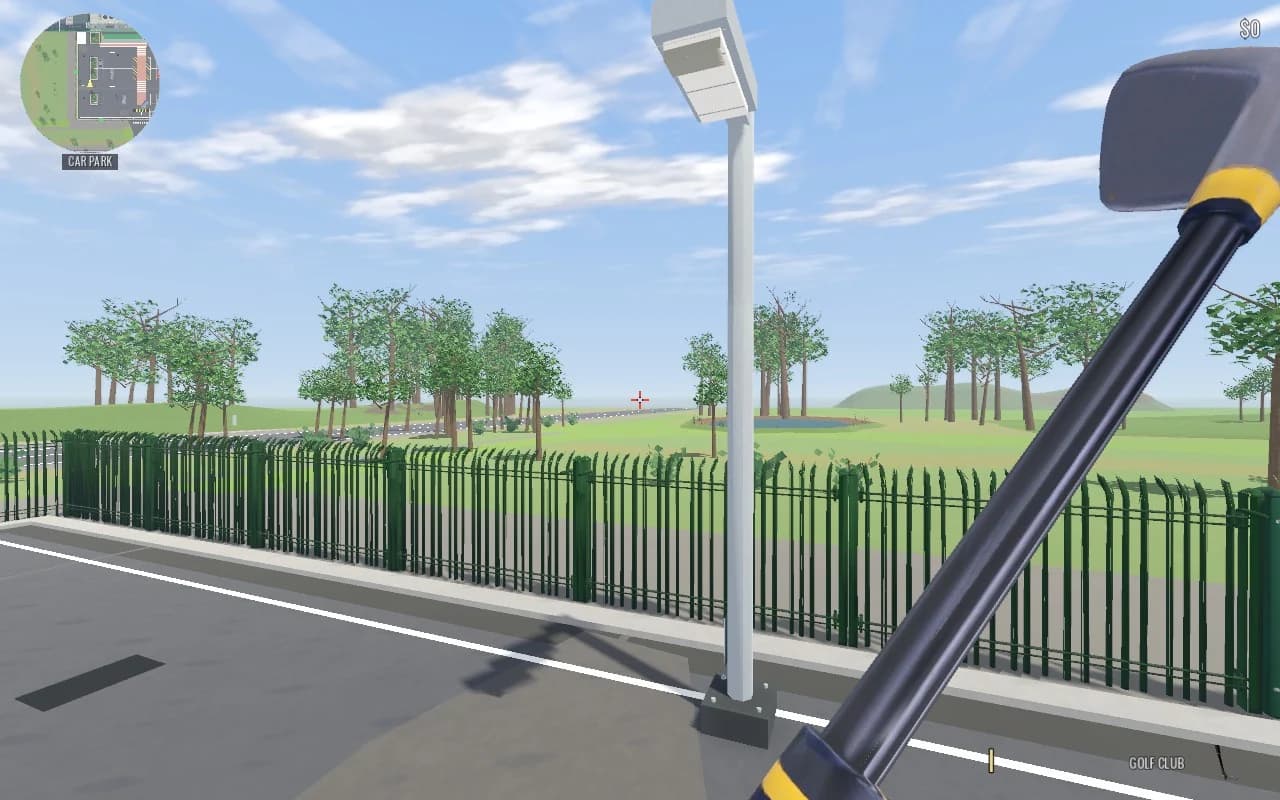
The car park used to end at a bright strip of ground, isolated mounds and an almost continuous wall of identical trees. We rebuilt the surrounding estate as the edge of an office and light-industrial district. The public approach now meets the front gate; a separate service route runs behind the building. Graded verges, drainage, neighboring plots and sparse utility detail explain what lies between those roads and the hills.
The skyline now recedes through uneven groves and layered slopes, leaving openings where the roads continue. Trees and shrubs vary in silhouette, density and condition. A small western pond has a clear bank instead of disappearing inside a hill. The work is outside the fighting space: the fence, traversable routes and gameplay boundaries remain where they belong.
Darkness has an address
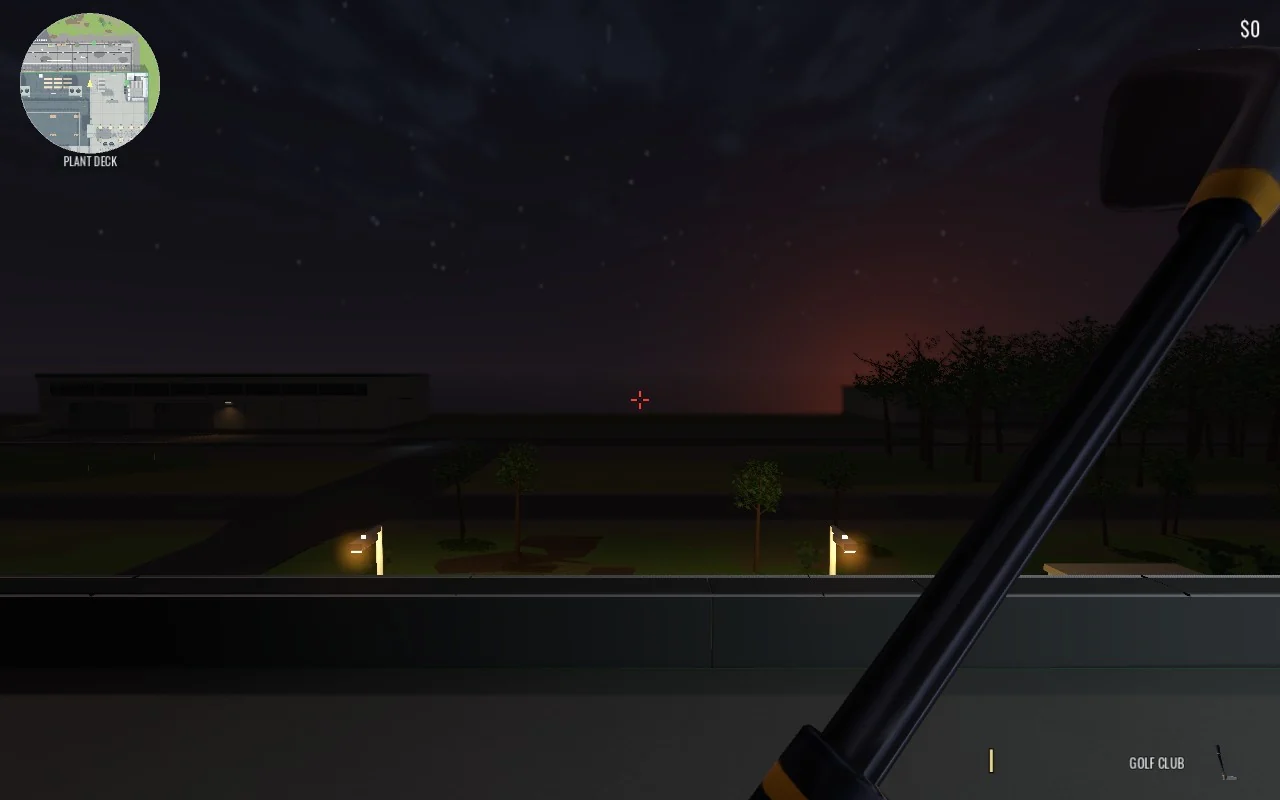
A few believable lights now pick out the neighboring road, entrances and service buildings without lighting up your arena. Later rounds let those fittings fail at their visible source; the rear work light can sag and recover, while other lights stay dark once they go. An atrium ceiling fitting has its own fault. The optional Reduce flashes and flicker setting smooths the short rebound without changing which light fails.
Beta 48 also made viewing distance respond to nearby working light. Daylight keeps the farther estate readable; darkness brings the background closer, while a live lamp holds open its local pool. The change eases in rather than snapping between rooms. Later skies keep their uneasy color without turning the far field into a bright fog wall.
Weather that reaches the whole estate
After round 7, rain can arrive following a dry spell of roughly three to six minutes. An episode lasts about four to seven minutes, then clears; it can carry across a round change. Rain falls over fixed parts of the car park, roads, outer ground and roof rather than forming a little curtain around the player. Exposed ground darkens and changes finish as it wets, then dries after the shower. Small runoff films follow drains and road edges. The standing puddles from an earlier trial were removed.
The sound follows where you stand. Outside, rain has a wider wash and ground-contact patter. On the roof it strikes the exposed surface; inside the office, a softer, lower roof patter is heard through the ceiling instead of cartoon-like individual drops. Roof rain stops above the slab, so it does not fall through the upper rooms.
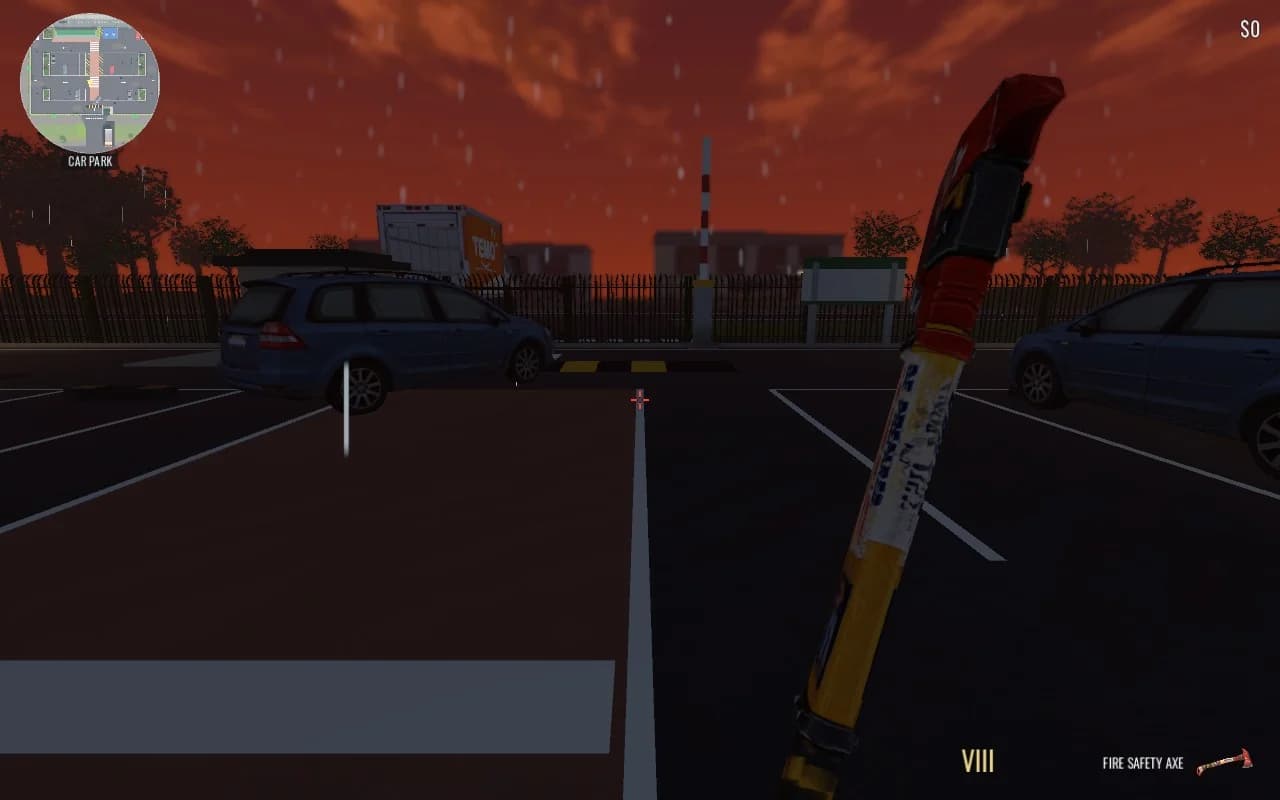
The trees hear it too
Wind comes in short, uneven gusts with quick peaks and lulls. Tree crowns, thin wood and bushes respond differently, with taller trees leaning more. The planted car park trees and bushes now share the same weather as the vegetation outside the fence. You hear more wind on an exposed roof and less inside. Strong gusts can rattle a mounted sign, occasionally squeak the hinged gate, or catch a loose drain grate; solid fixtures stay quiet.
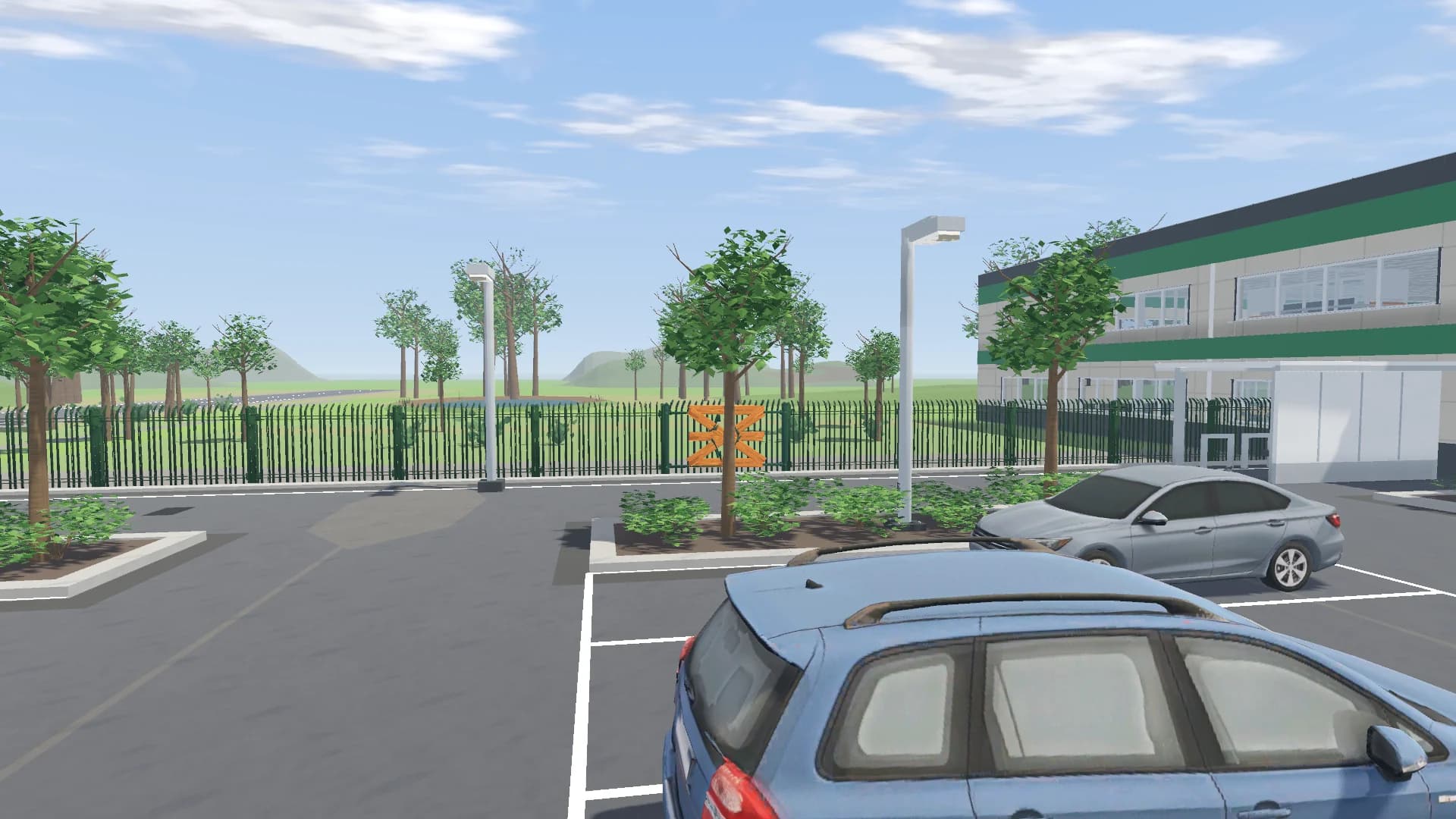
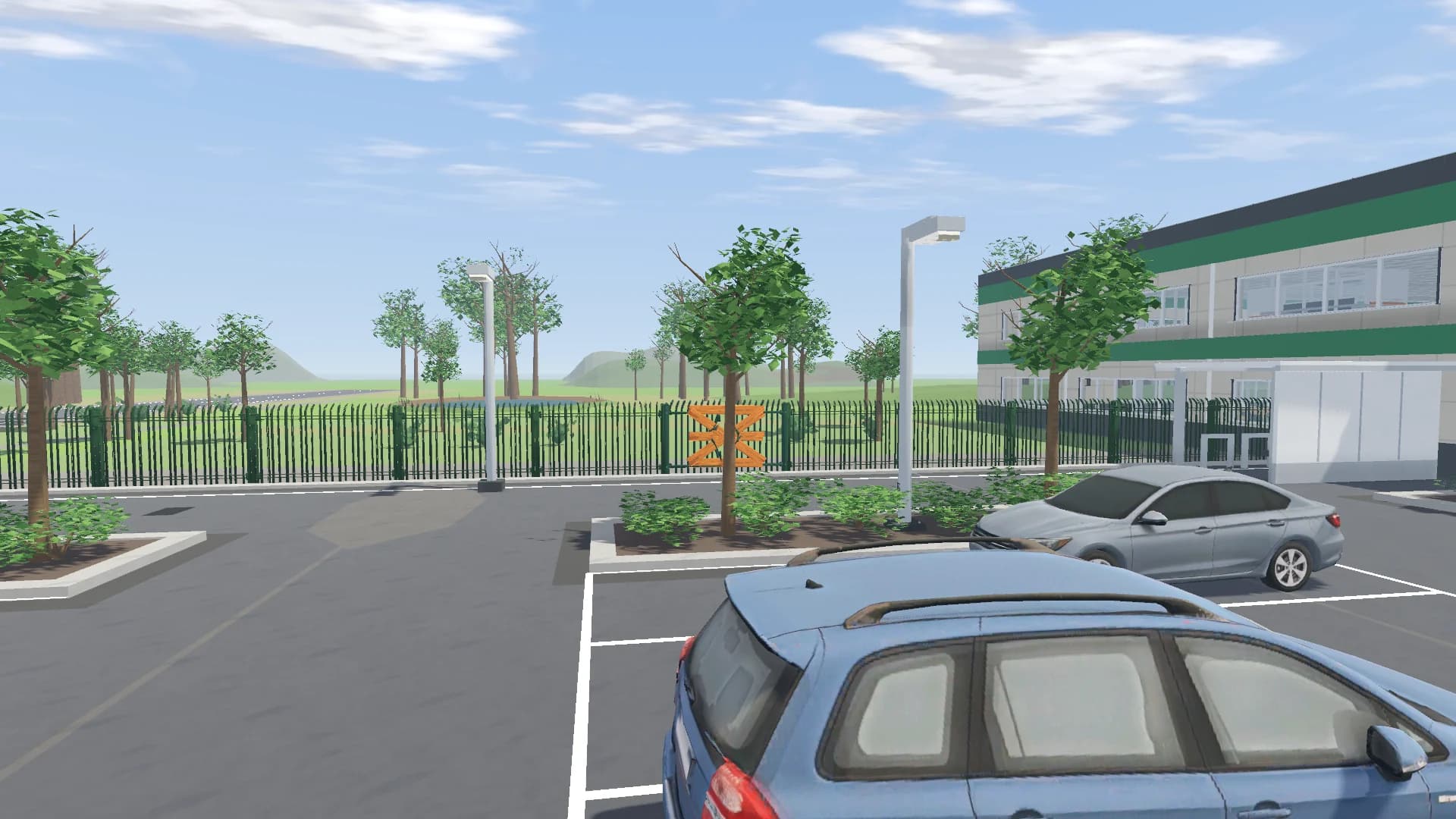
Small birds are more common early in a run and retreat when heavy weather arrives. Crows take over later: they circle beyond the perimeter, returning more often as rounds advance. Their calls come from the same distant place as their flight. They set the mood rather than warn of an attack.
Someone is still calling
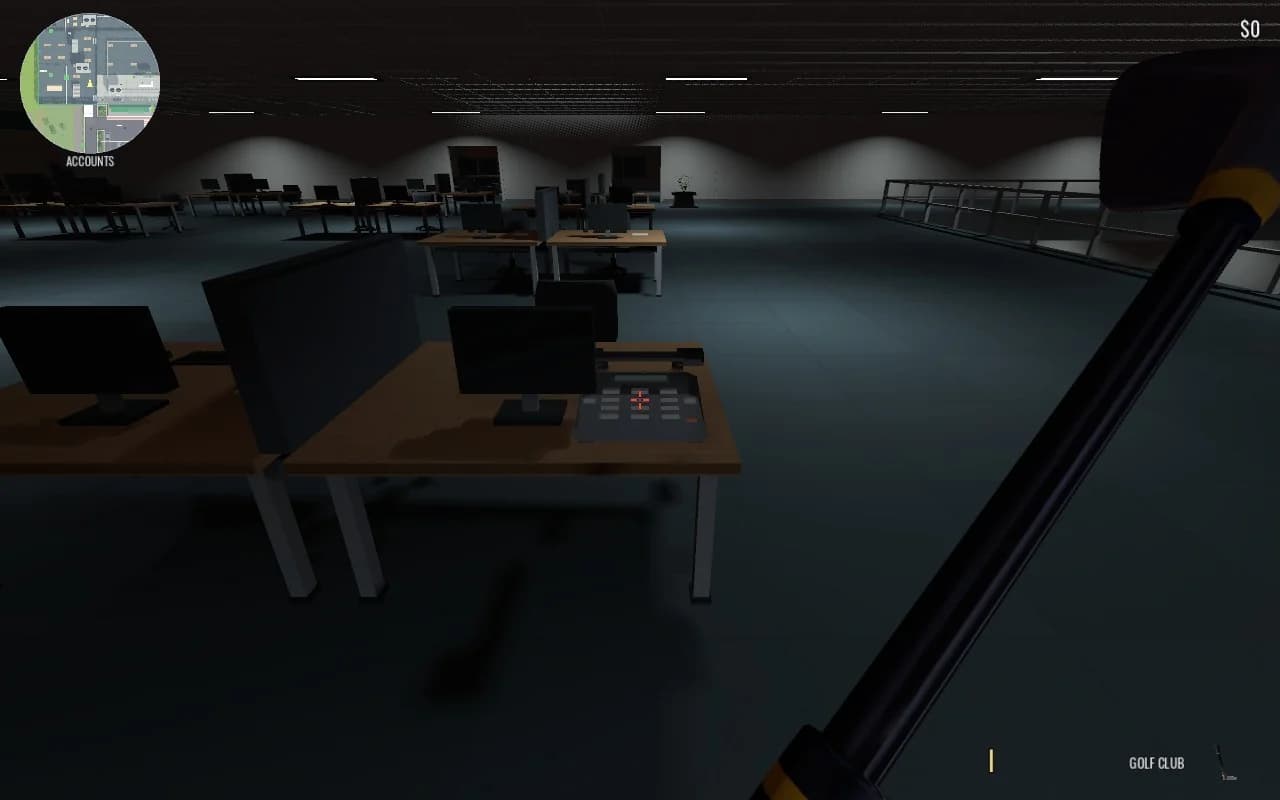
Two abandoned office phones can ring during a few windows before the round-24 blackout. The four short archival messages become more unsettling as the shift progresses. The ring is easier to hear from the atrium and Accounts stairs; answer nearby and only the person holding that phone hears its recorded line and sees the exact subtitle. Missing a call carries no penalty. A reconnect can restore an active ring without replaying the message.
A smoother arrival, a harder crowd
The first late-round zombie of a new visual type used to pause while its eye-mask mesh was prepared. The loading screen now prepares the eight visual rigs steadily, one per frame, before handing you the level. A trapped zombie's choice of a reachable interior exit is also cached until the route, target or nearby state changes; an open doorway is still checked every tick so it can vault through.
Those changes target particular spikes and repeated path questions. They do not raise the live zombie cap or change spawn pacing, and we have not measured a reliable overall FPS gain in a mixed 100-zombie Round 30 view. At that density, body simulation and rendering still both matter. We'll keep testing before changing the balance of a late wave.
Get Beta 49 from the download page or itch.io. Take a look over the fence next time the weather turns.