Builds 62–63 · Combat & horde AI
Betas 62–63: The Horde Takes the Stairs
The horde has finished its facilities induction. It knows where the stairs are now, and it has stopped queuing for them.
Beta 62 lets every zombie attack on the move and brings in the remastered Boss. Beta 63 changes how the horde decides who to chase and how it gets to them, which matters most once you head upstairs. The game images below are in-engine captures from a test scene, and the charts are measurements from our test harness.
They swing on the move
Walking and running zombies no longer stop dead to attack. Every type, round variants included, accelerates into the swing, stumbles and recovers, then attacks again from a standstill or picks the chase back up if you have moved away. Recovery no longer leaves a zombie frozen between attacks. The Scapegoat keeps its separate 1.5 m explosion.
Reach is fixed, and the same for every zombie. A swing starts at 1.2 m from a standstill, 1.3 m at a walk and 1.5 m at a run, but no zombie lands a blow from further than 1.2 m, whatever its size. The blow follows the animation and checks where you are as it lands, so stepping out of a lunge works.
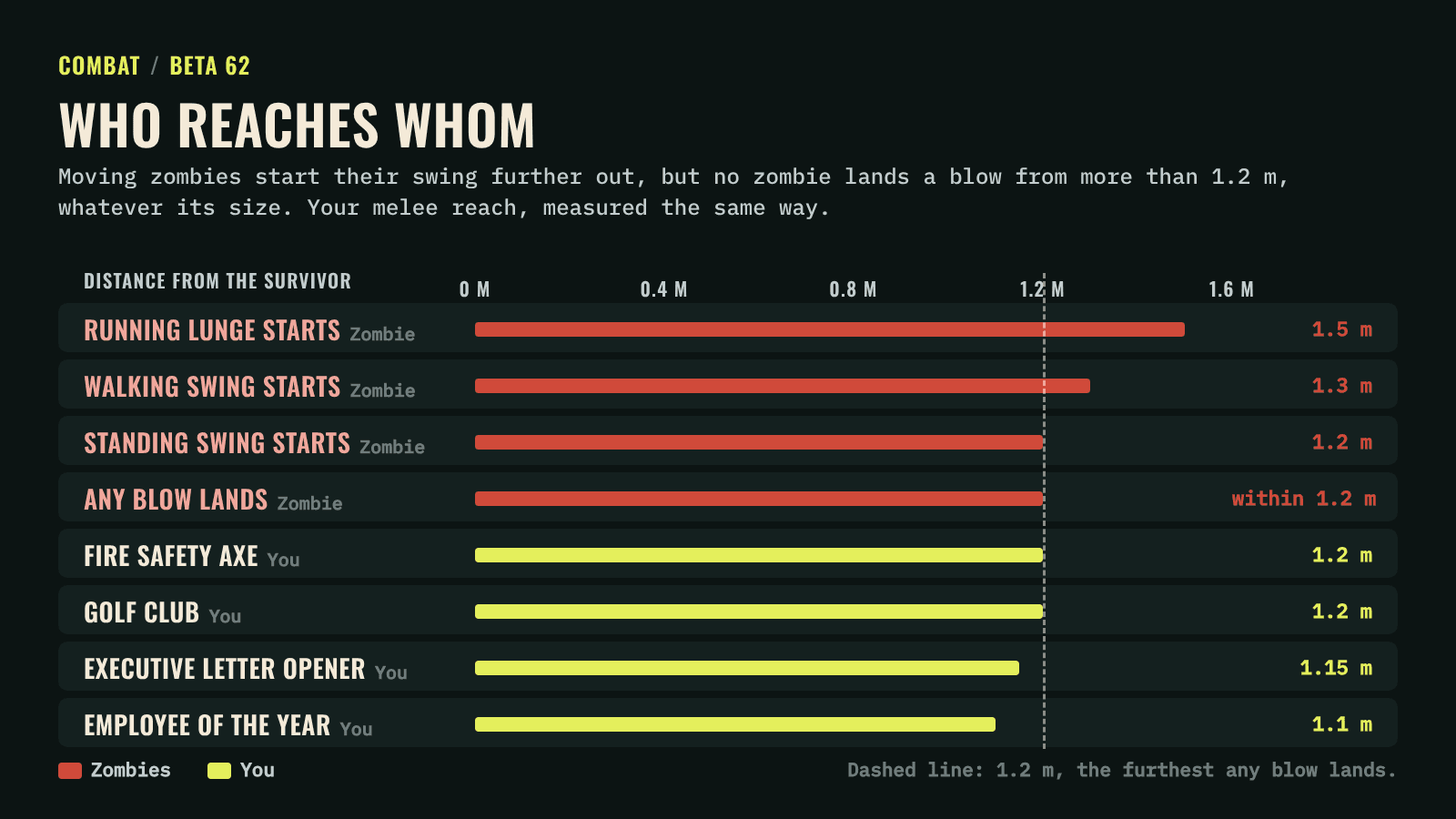
Your own melee reach is shorter: 1.2 m for the Fire Safety Axe and Golf Club, 1.15 m for the Executive Letter Opener and 1.1 m for the Employee of the Year, with sweeps and shoves a fifth narrower. Damage, swing speed and shove strength are unchanged, and the database lists the new figures. Zombies also come right up to a barricade, to 0.65 m, before they start tearing at its boards.
The Boss is remastered, with a corrected model and rig, retargeted animations, new moving lunges and stumble recoveries, and swipe effects on its attacks. The minimap now turns with you: your arrow stays pointing up while the rooms and markers rotate around it, and N, E, S and W labels hold their true bearings around the edge. The glasses' upper and lower reflections are subtler, and Beta 62 also fixes movement input, switching between input devices, resuming movement and the spectator camera.
Upstairs is no longer safe
Until now a zombie chose its survivor by straight-line distance. Somebody on the roof directly above the office looked close, even though the walk there is two flights of stairs and twenty-odd metres. Zombies set off for the stairs, found somebody “nearer” on the way and turned back. In our tests, not one of them reached the roof.
From Beta 63 a zombie chooses by the walk it would have to make, stairs included, and sticks with that choice. It looks round for somebody nearer every five seconds, and only changes its mind for somebody 3 m or a fifth of the way closer. It looks round at once when you shoot it, when its survivor goes down or leaves, and when somebody walks up within 3 m of it on its own floor.
If you are shut behind a door on another floor, the crowd now climbs (or goes down) the stairs to that door and leans on it there. It used to gather on the ground floor directly beneath it, looking up.
No more single file
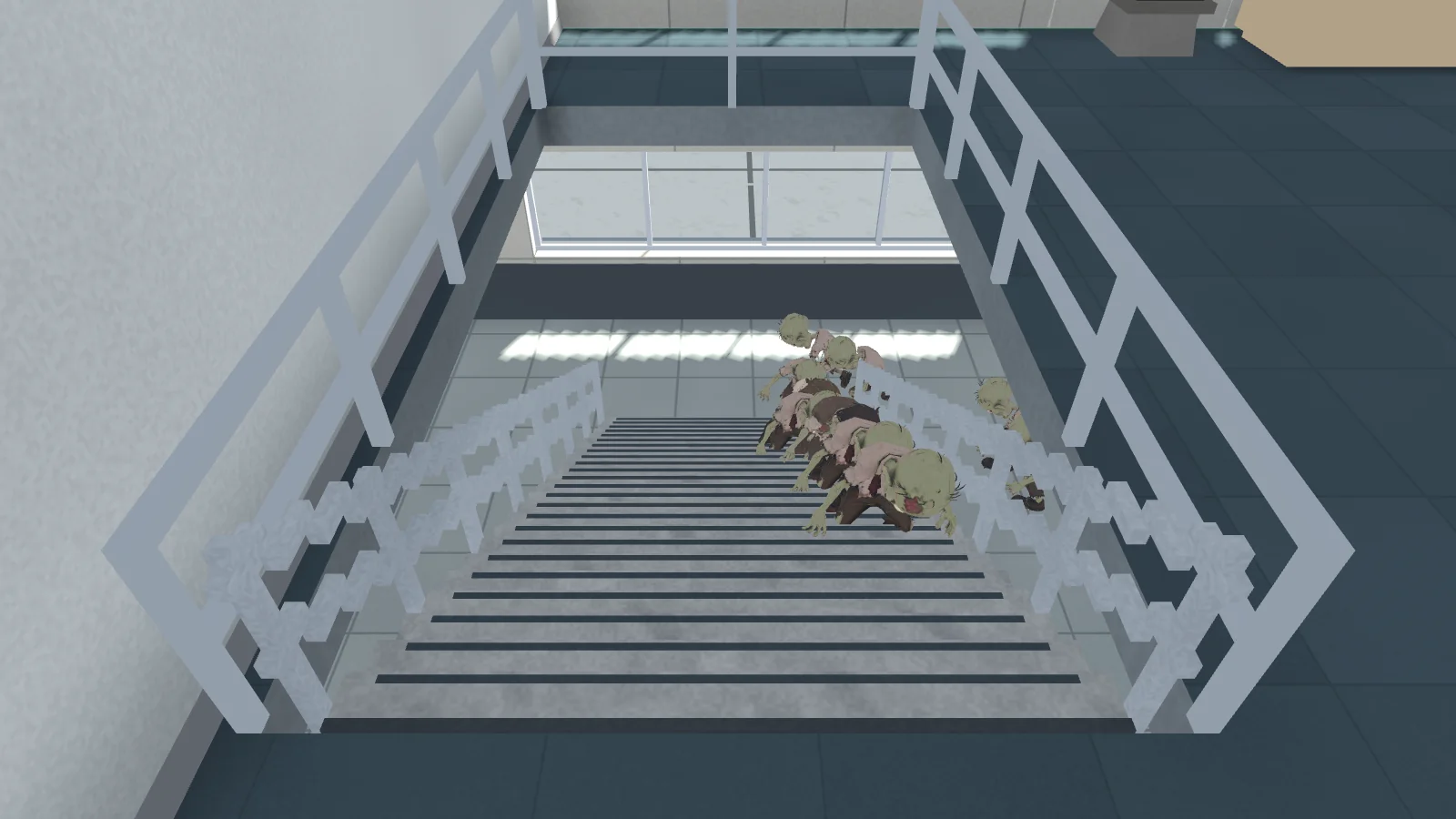
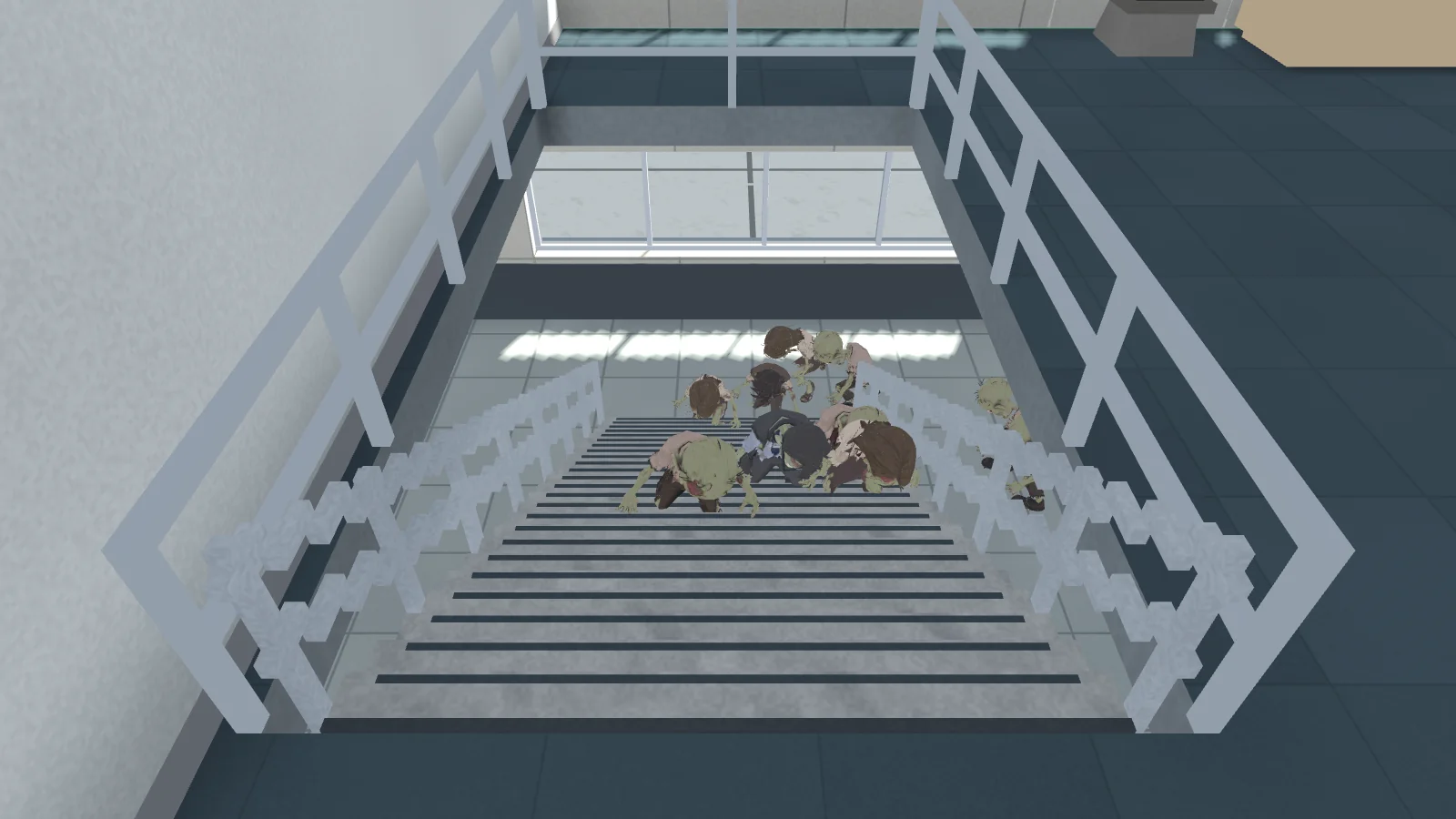
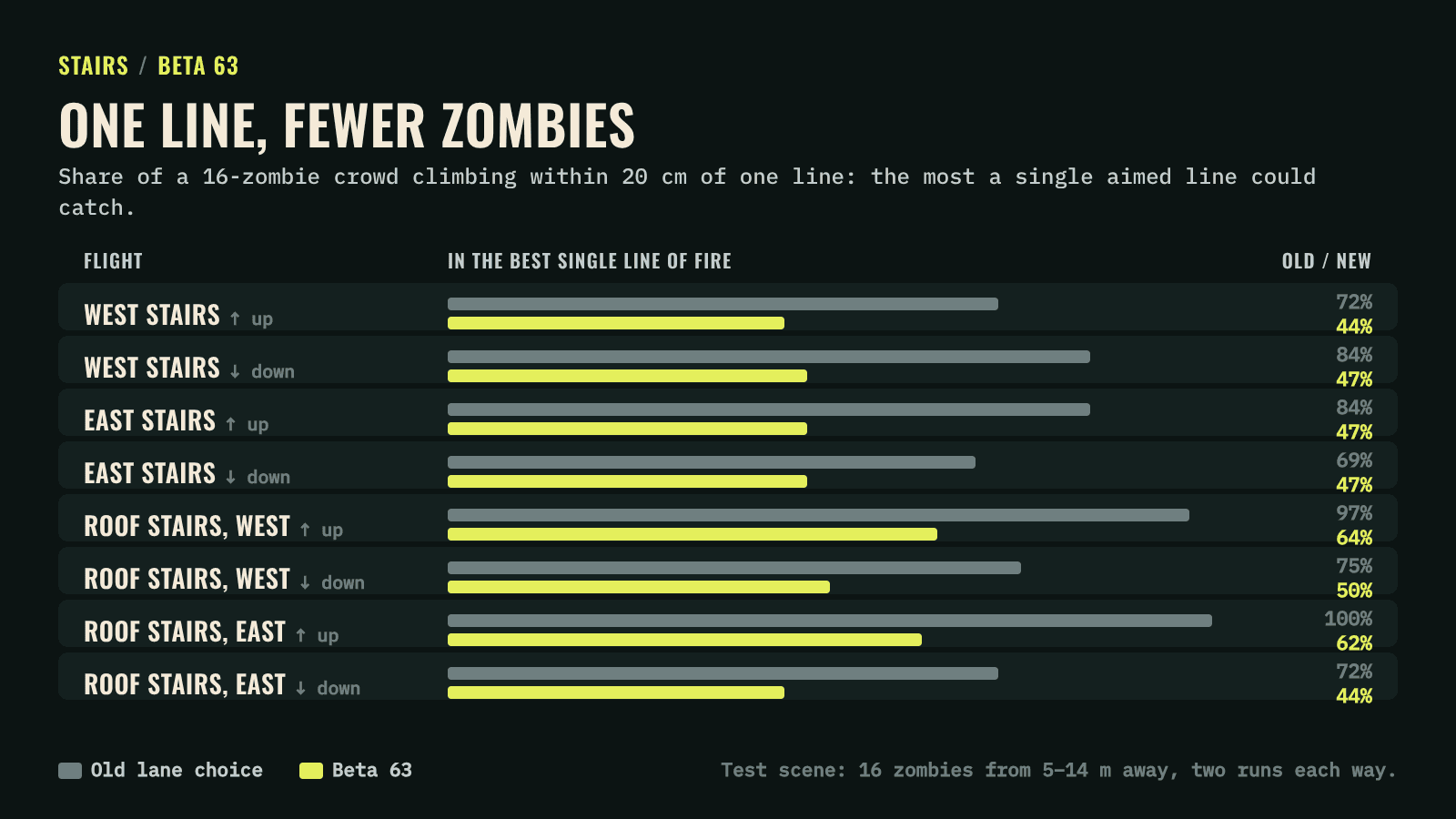
A crowd reaches a staircase down one corridor, so it used to climb the way it arrived: in single file, one line for anybody at the top to shoot straight down. Now each zombie picks its own line across the flight as it steps on, keeping clear of the zombies already climbing ahead of it and never cutting across one beside it.
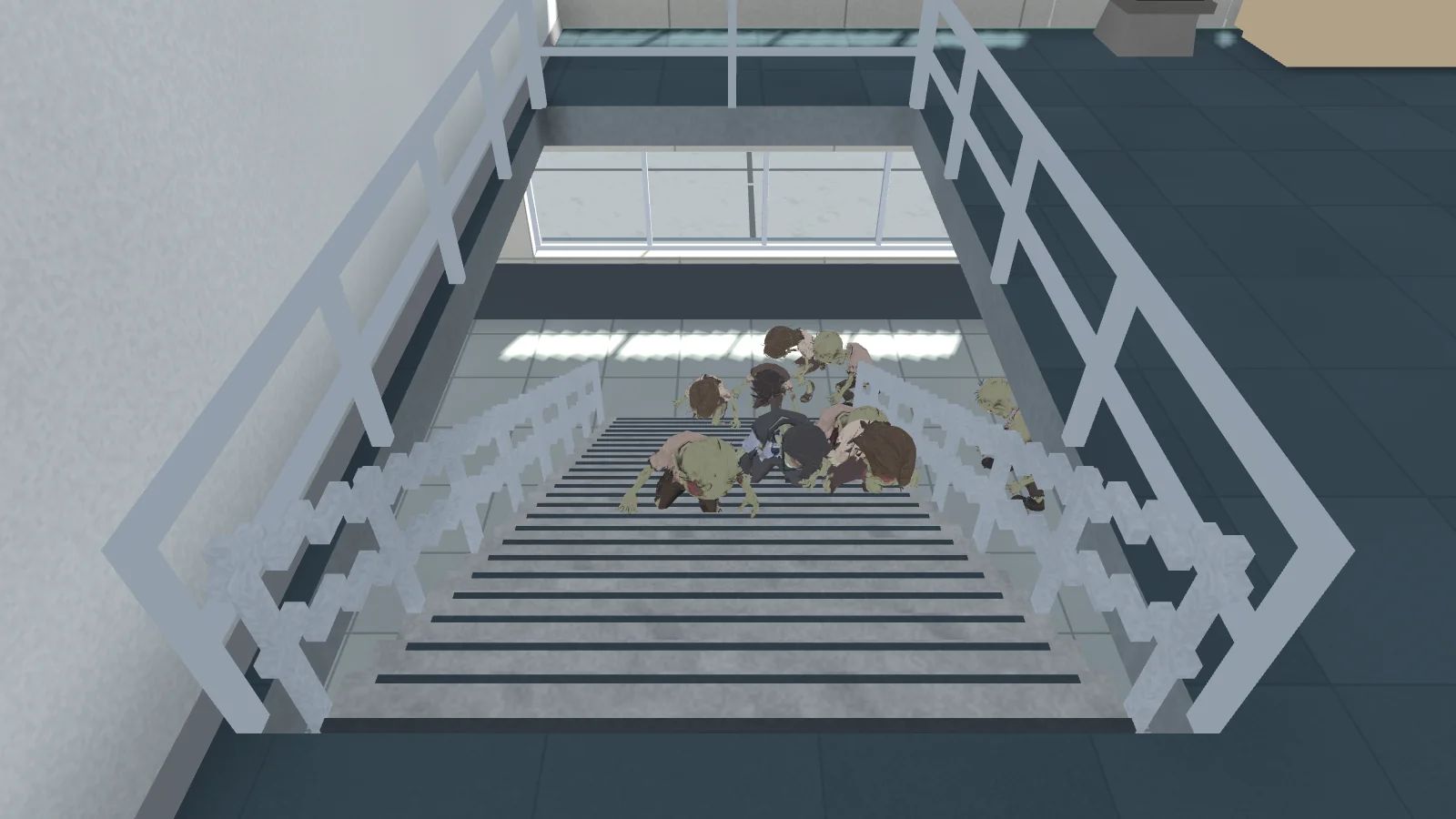
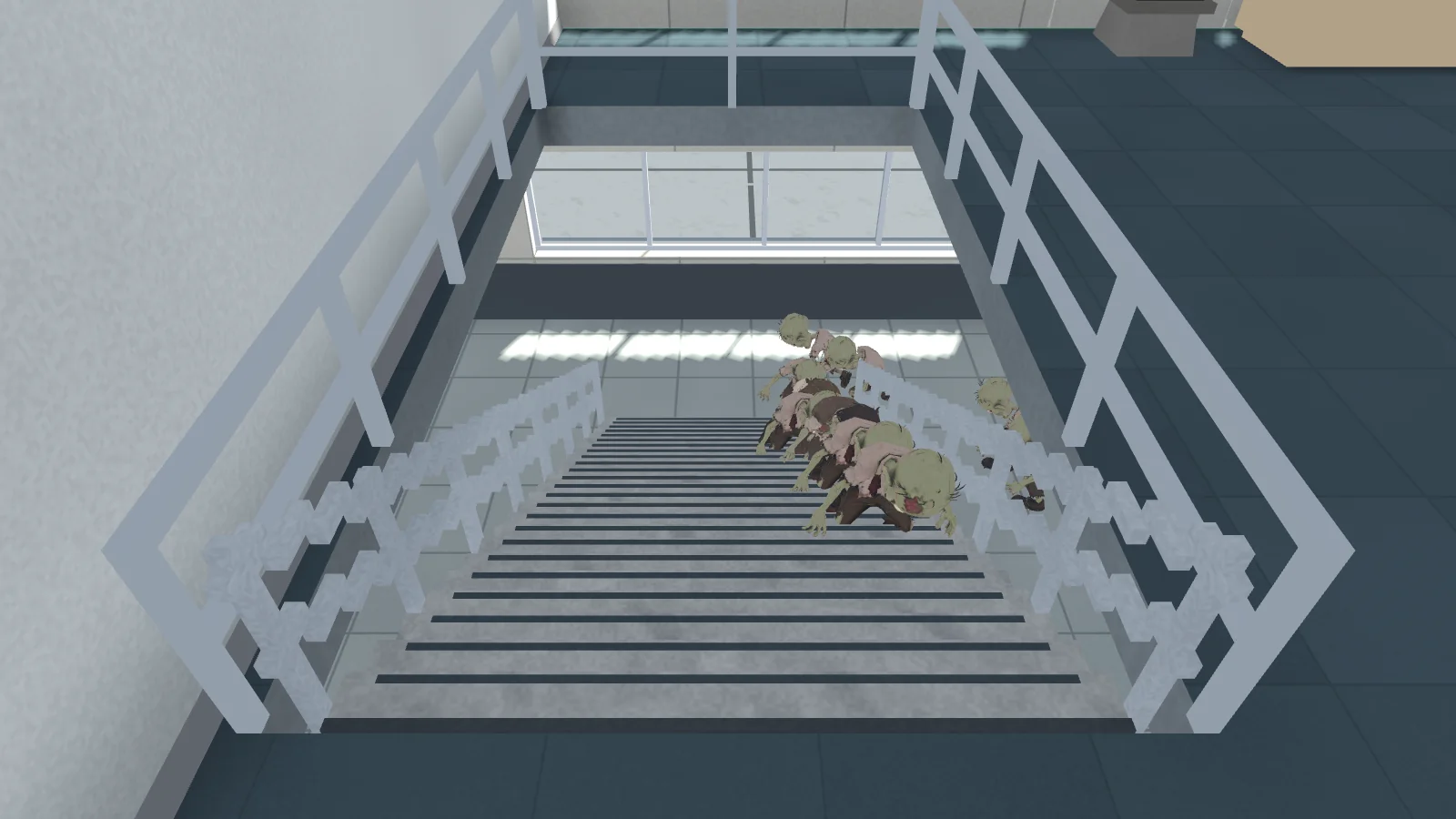
The same test twice: 28 zombies from the same spawn points, captured 7.5 seconds into the chase from the head of the east stairs. Before uses the old lane choice; after is Beta 63. Captured in-engine with Godot's compatibility renderer, so the lighting is flatter than in the game, and zombies that have reached the top are left out of the shot.
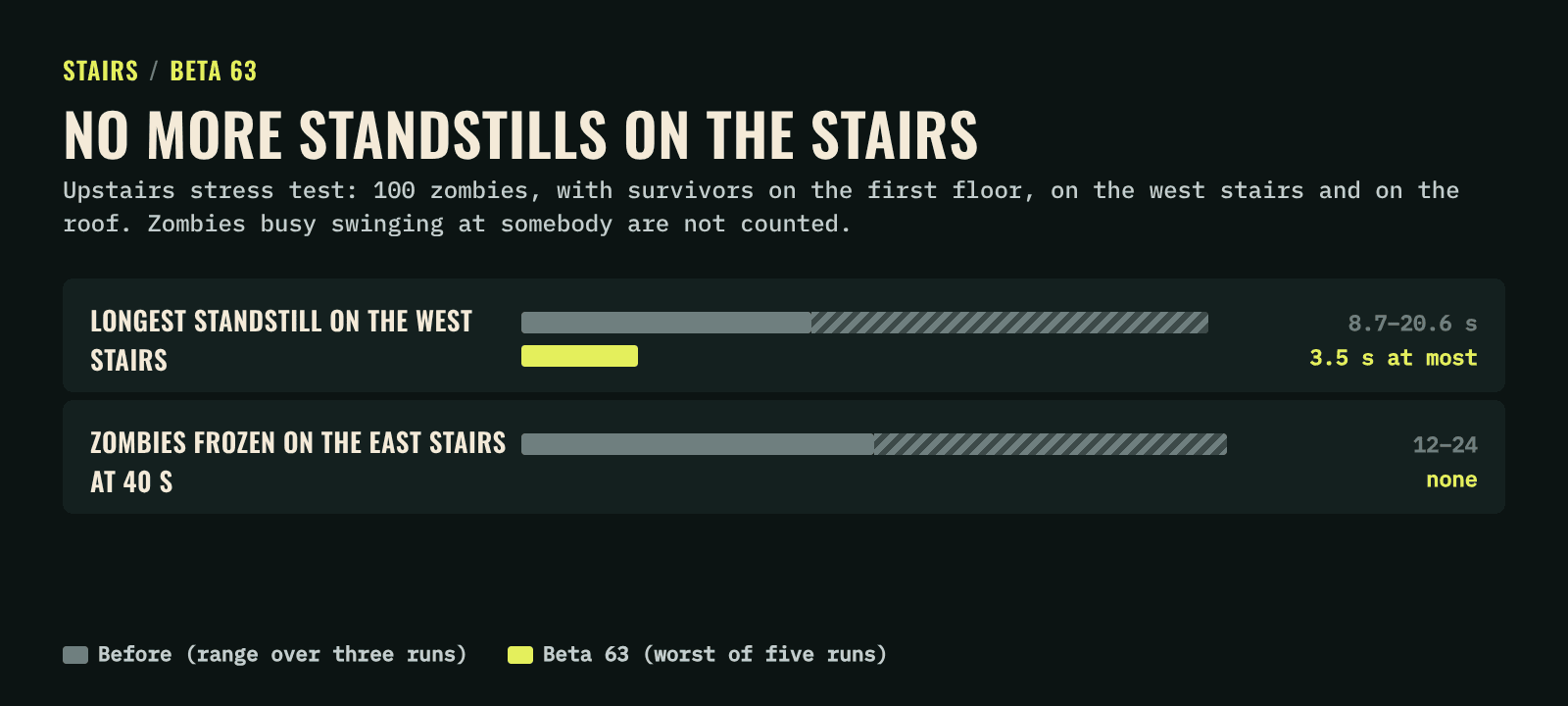
The top of the stairs was also the best seat in the house. With survivors upstairs, dozens of zombies could lock up on and around a flight, standing still and unable to attack. Now a zombie stuck in a queue for a second steps past the one in front, inside the rails. One that can get no further swings at a survivor standing at the head or foot of the flight, and no claw lands through a stair rail. Run back down while a zombie is still near the start of its climb and it turns round with you.
A lighter horde to run
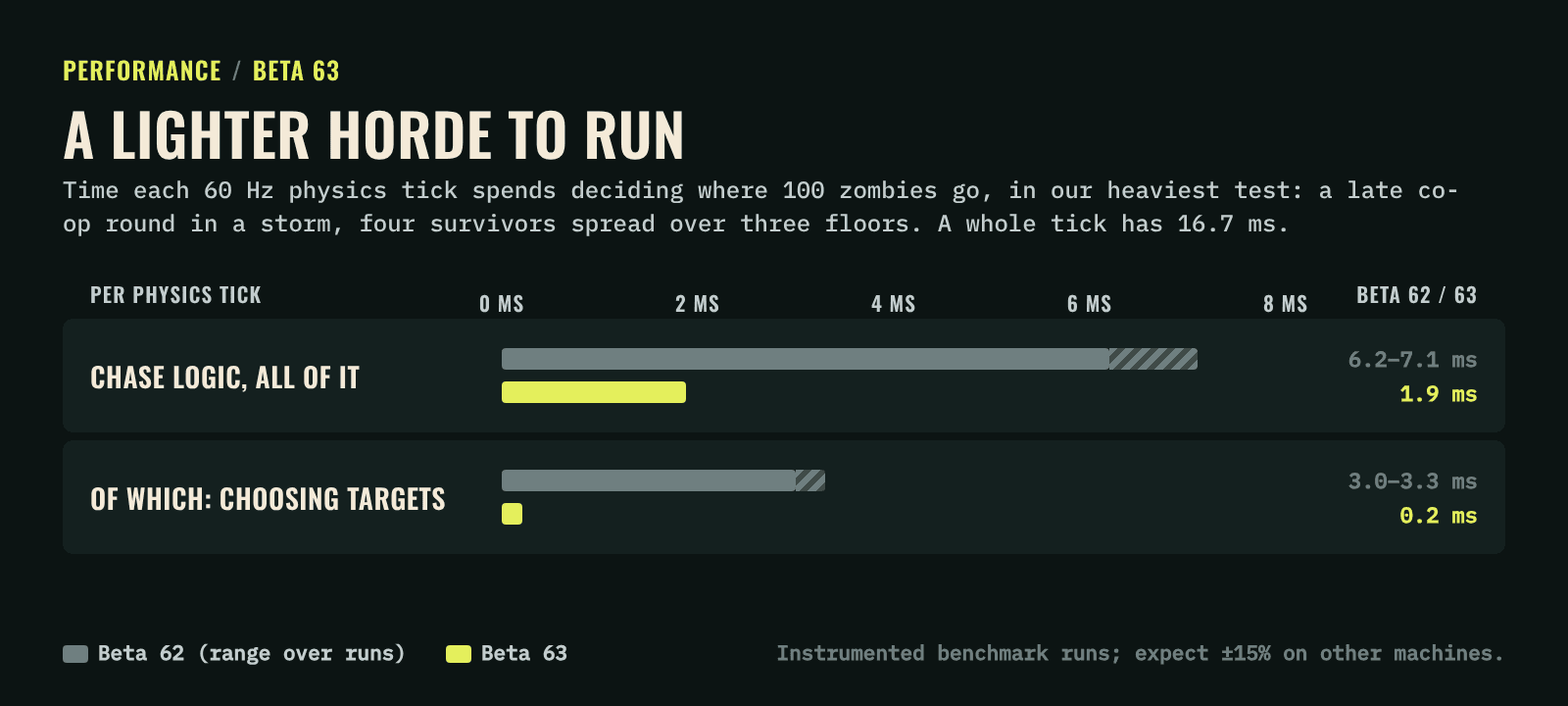
Every zombie used to re-decide everything sixty times a second: who to chase, which room or staircase to head for, and whether it needed a new path. Now a zombie close to a fight still decides every tick, while the rest of the crowd takes turns, fifteen times a second, or seven and a half when nobody is within 35 m. In between it keeps walking its route, and it always swings at anybody who comes into reach. The horde also reads one shared snapshot of the survivors each tick instead of every zombie checking every survivor itself.
Download Beta 63 for Windows, Linux or macOS and find out how long the roof holds.